12/03/2026
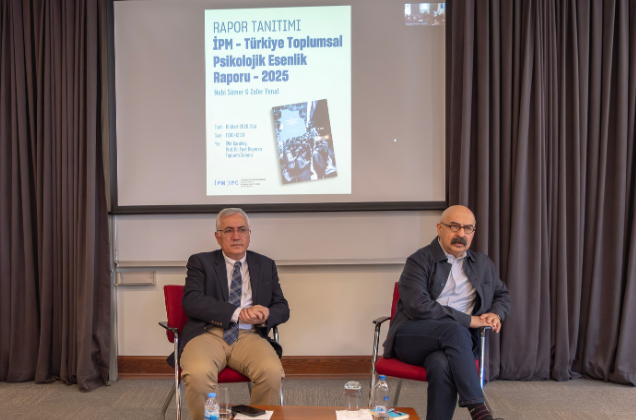
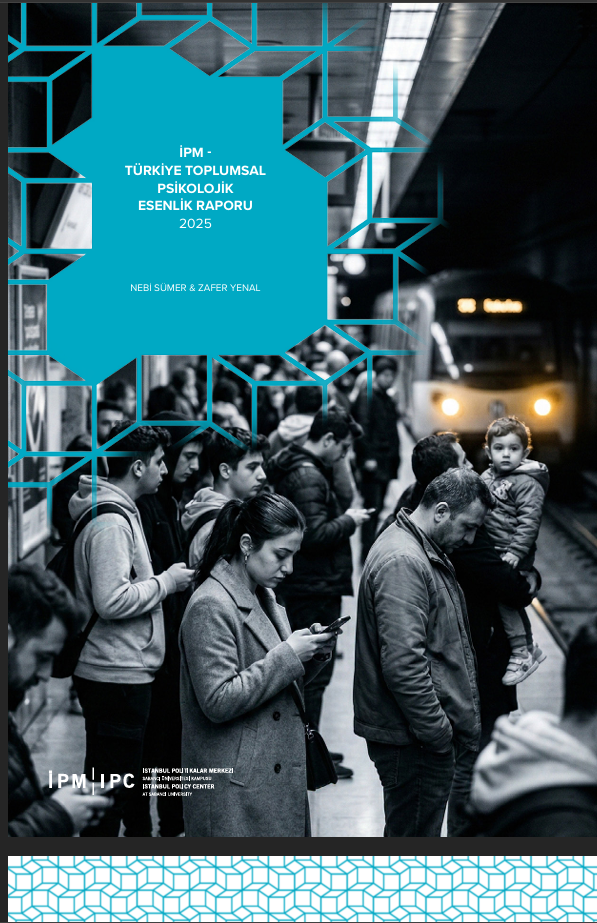
Sabancı University Istanbul Policy Center (IPC) has produced the first systematic study to comprehensively assess Türkiye's socio-psychological well-being, based on both international and national data sources. The report was presented on March 10, 2026, by Nebi Sümer, a faculty member at Sabancı University's Faculty of Arts and Social Sciences, and Zafer Yenal, a faculty member at Sabancı Business School. According to the IPC-Türkiye Sociological Well-being Report 2025, prepared by the Social Psychology Studies within the field of Sustainability and Well-being research, Türkiye ranks 92nd out of 147 countries in the World Happiness Report, 38th out of 41 countries in the OECD Better Life Index in terms of life satisfaction, 21st out of 22 countries in the Global Human Development Survey, and 95th out of 167 countries in the Legatum Well-being Index.
The Decline in Psychological Well-being Accelerates Since 2017
The Türkiye Social Psychological Well-being Report, considered a structural necessity for social sustainability, evidence-based policy-making, making disadvantaged groups visible, and rebuilding social trust, aims to raise awareness about psychological well-being, which is closely related to physical and psychological health. A systematic analysis of seven international indices, three national data sources, and secondary contextual indicators points to low levels of psychological well-being in Türkiye across all measurements, and an accelerating decline since 2017. The first issue of the series, planned to be published annually to monitor the level of psychological well-being in a multidimensional way, includes Gallup data showing that Türkiye is the country with the least smiling people in the world. According to data from the Gallup Global Emotions Barometer, based on surveys of approximately 150,000 people in over 140 countries, the gap between positive and negative emotions since 2016 is evolving towards "deepening unhappiness."
Personal freedom, security, social capital, and governance are at their weakest levels.
According to the Legatum Well-being Index, while physical infrastructure and living conditions are relatively strong in Türkiye, personal freedoms, security, social capital, and governance are at their weakest levels. According to the World Values Survey and PEW data, generalized trust in Türkiye is at one of the lowest levels globally at 14 percent, while complete trust within families has also decreased by 13 points. In the Türkiye Social Psychological Well-being Report, the current situation in Türkiye is defined by the concept of an "inefficient regime of unhappiness." This concept points not only to low life satisfaction but also to the fact that this low satisfaction has transformed into a sustainable social balance. According to the "inefficient regime of unhappiness," society neither reaches a high level of subjective well-being nor experiences an overt collapse. Instead of channeling dissatisfaction into collective improvement channels, it becomes internalized or leads to individual exit strategies, especially the desire to emigrate.
Social Dynamics Also Examined
The report addressed psychological well-being not only through individual indicators but also in conjunction with the social context that influences it. Three key indicators were highlighted. According to the report, the decline in trust in others to its lowest levels in the last forty years, and the weakening of trust within families over time, indicate a significant erosion in trust and social support networks. On the other hand, the rise in unemployment among young higher education graduates to 25%, the NEET (neither in employment, education, or training) population rate reaching its highest level among OECD countries, especially among women, the fact that a large proportion of retirees continue to work, and increasing income inequality show that economic pressures negatively affect psychological well-being. Furthermore, the decline in Türkiye's ranking in international democracy indices and the parallel decline in happiness levels with democratic regression reveal that the political environment also has a significant impact on social well-being.
Why psychological well-being reporting?
The report states the following regarding the necessity of reporting on psychological well-being: “Over the past two decades, international organizations have acknowledged that economic growth alone does not reflect societal well-being; psychological well-being has become one of the key indicators of a country's level of development. The OECD's Better Life Index, developed in 2011, the United Nations' World Happiness Report, published since 2012, and the UN Sustainable Development Goals are concrete reflections of this approach. Despite the profound demographic, economic, and political transformations experienced in Türkiye over the last 50 years, psychological well-being has not been systematically monitored. This report aims to fill this gap.”
Click here to read the report.
About IPC
Istanbul Policy Center (IPC) is a global policy research institution that specializes in key social and political issues ranging from democratization to climate change, transatlantic relations to conflict resolution and mediation. IPC organizes and conducts its research under three main clusters: The Istanbul Policy Center-Sabancı University-Stiftung Mercator Initiative, Democratization and Institutional Reform, and Conflict Resolution and Mediation. IPC has provided decision makers, opinion leaders, and other major stakeholders with objective analyses and innovative policy recommendations for more than 10 years.
About Social Psychology Studies
Social Psychology Studies, operating within the Sustainability and Well-being research area of IPC, will publish the “IPC – Türkiye Social Psychological Well-being Report” series starting in 2025, comprehensively reviewing international and national data sources. The Türkiye Social Psychological Well-being Report 2025 is the first in a series planned to be published at the end of December each year. This first issue summarizes the history of psychological well-being measurement, the relevant literature, and the main rationale for the series.